



FWD vs RWD vs AWD: A Guide to Drivetrain Performance
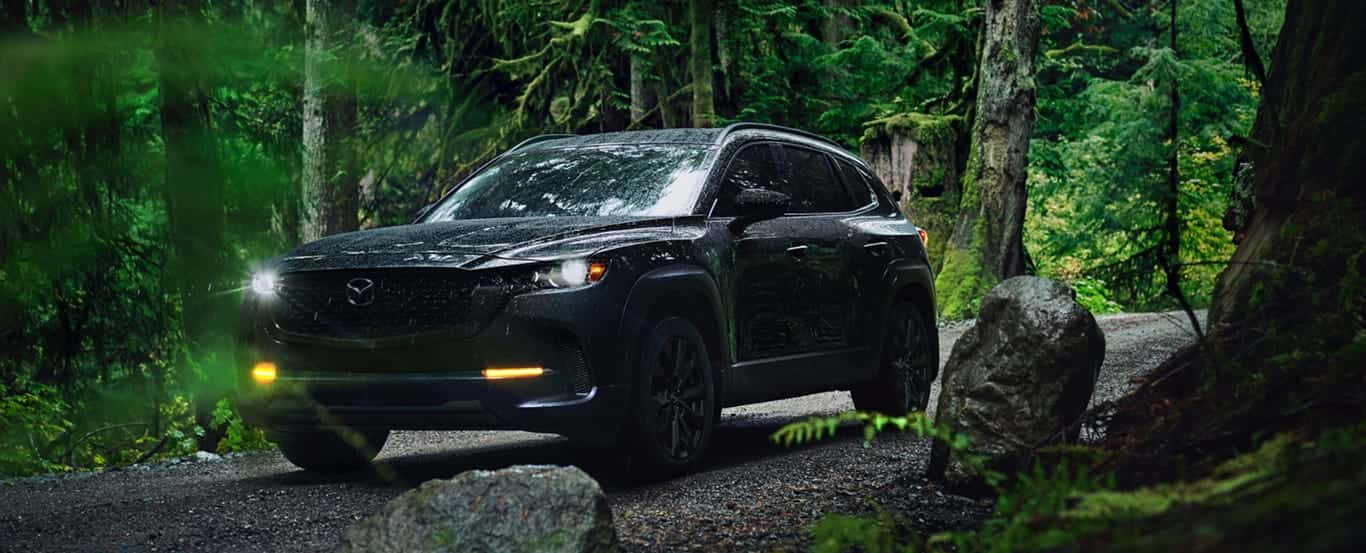 Choosing between FWD, RWD, and AWD changes how a car feels, whether you’re grinding through traffic or hitting a canyon road on a Sunday afternoon. San Diego County’s mix of weather and terrain makes this more than a spec-sheet exercise. This guide breaks down the difference between FWD, RWD, and AWD in plain terms, so you can match a drivetrain to how you actually drive.
If you’re weighing options now, it helps to see the different drivetrains side by side in person. Feel free to explore our new Mazda inventory and get a sense of how each system feels behind the wheel before you decide.
Why Drivetrain Choice Matters for San Diego County Drivers
San Diego’s driving conditions are deceptively varied. Coastal neighborhoods average around 10 inches of rain a year, while inland mountain communities near Julian see 33 inches or more. That gap matters when you’re planning a weekend drive from El Cajon up into the mountains, or just getting through a drizzly I-8 commute during a winter storm system. During one notable storm, El Cajon itself recorded 2.98 inches of rain in a single day. Even a generally dry region can throw sudden wet-weather trouble your way.
Add in daily elevation changes, canyon curves, and stop-and-go traffic near the border and through the East County, and the FWD vs RWD vs AWD question stops being academic pretty fast. The right drivetrain changes your traction, your fuel costs, and how confident you feel on a wet road.
FWD, RWD, and AWD: How Each System Works
Each layout sends engine power to the wheels differently, and that changes how the car grips, handles, and costs to run over time.
Front-Wheel Drive (FWD) Explained
FWD sends power exclusively to the front wheels. The engine’s weight sits directly over those wheels, which improves grip in wet or slippery conditions. FWD vehicles also tend to be more fuel-efficient, and they have a natural tendency to understeer, meaning the front end pushes wide in a hard turn rather than the rear sliding out. That understeer is generally easier for less experienced drivers to manage than an oversteer situation. The Mazda3 Hatchback’s FWD trims are a good example, offering predictable handling and strong fuel economy for everyday driving in normal conditions.
Rear-Wheel Drive (RWD) Explained
RWD sends power to the rear wheels while the front wheels handle steering only. Weight shifts rearward under acceleration, and the more balanced front-to-rear weight distribution typically gives RWD cars stronger cornering grip and acceleration traction than FWD. The tradeoff is that RWD is less forgiving if the rear end breaks loose, and it’s generally pricier to buy, while maintenance costs vary by drivetrain and use case; it also has higher fuel consumption than FWD. Mazda’s clearest RWD example is the MX-5 Miata, a lightweight roadster built around a 53:47 weight distribution that makes it a favorite for drivers who want that classic rear-drive feel.
Mazda i-Activ AWD® Explained
i-Activ AWD® is standard across Mazda’s crossover SUV lineup, including the CX-5, and is also available on the Mazda3. Unlike systems that only kick in when slip is detected, i-Activ AWD stays continuously engaged, monitoring vehicle dynamics and wheel loads in real time to distribute torque automatically. Mazda says the system reads 27 sensors roughly 200 times per second, evaluating wheel slip, outside temperature, and even windshield wiper activity to anticipate what the road is about to do. That constant monitoring helps the system anticipate changing conditions, such as a sudden patch of rain, before traction is actually lost.
FWD vs RWD vs AWD: Key Performance Comparisons
With the basics covered, here’s how FWD, RWD, and AWD stack up across the factors that matter most day to day.
| Drivetrain | Traction/Handling | Fuel Economy Impact | Typical Cost Premium | Best Use Case |
|---|---|---|---|---|
| FWD | Understeer-biased; solid wet-road grip from engine weight up front | Generally best fuel economy of the three | Lowest to buy; comparable to RWD to maintain | Everyday commuting, flat/urban driving |
| RWD | Balanced weight distribution; strong cornering and acceleration grip, less forgiving if it breaks loose | Typically lower economy than FWD | Pricier to buy than FWD | Performance and driver engagement |
| AWD | Continuous torque distribution helps direct power to the wheels with the most grip | Added weight/complexity generally lowers economy vs. FWD | Roughly $1,500–$4,000 premium; more hardware to service | Mixed weather, coastal-to-mountain driving |
Wet Weather Traction and Handling
AWD generally offers stronger traction on wet, loose, or slippery surfaces than FWD by directing power to the wheels with the most grip. That said, tires matter just as much as the drivetrain itself. An AWD car riding on summer or all-season tires can actually underperform a FWD car equipped with proper winter tires. Michelin’s own testing found that FWD paired with winter tires outperformed AWD paired with all-season tires in nearly every category except acceleration, and that the AWD setup actually needed a longer braking distance. AWD helps, but it doesn’t replace the right set of tires.
Fuel Efficiency and Running Costs
FWD is generally the cheapest drivetrain to run, since it carries less weight and mechanical complexity than AWD. AWD’s added hardware typically reduces fuel economy compared to FWD. Comparing a FWD Nissan Altima to an AWD Nissan Rogue, for instance, shows AWD costing roughly $150 more per year in fuel at 15,000 miles annually, though oil change and brake costs come out nearly identical between the two. Mazda’s own numbers show the gap can be modest: the CX-5 with standard i-Activ AWD and the SKYACTIV®-G 2.5L engine is EPA-estimated at 24 city/30 highway/26 combined MPG, while the CX-50 2.5 S trim delivers 24 city/30 highway MPG despite also carrying AWD. The CX-50 Hybrid narrows the gap further, at an EPA-estimated 39 city/37 highway/38 combined MPG.
Acceleration Dynamics
RWD tends to excel in straight-line launch acceleration thanks to weight transferring onto the rear wheels under hard throttle. AWD, meanwhile, minimizes wheelspin for a more controlled, if not always quicker, launch. The CX-50 2.5 Turbo trim illustrates what AWD can do when paired with more power, using a twin-scroll turbocharged engine producing up to 256 horsepower and 320 lb-ft of torque on premium fuel.
Cornering Stability
RWD generally offers strong grip through a bend and precise steering feedback. AWD takes a different approach, using automatic torque distribution to help direct power to the wheels with the most traction. i-Activ AWD proactively monitors vehicle dynamics and automatically adjusts torque distribution, aiming for predictable handling rather than letting the car’s natural tendencies take over.
If you want to feel that torque distribution in action on a real canyon road, it’s worth scheduling time to test drive the 2026 Mazda CX-50 and see how the system responds through the curves.
Maintenance Requirements
Maintenance is where the conventional wisdom gets complicated. FWD is mechanically simpler and cheaper to build, but Edmunds notes that front-drive components tend to wear out faster than the simpler rear-drive layout, so the two roughly even out over a long ownership period. AWD is the clearer case: more hardware means more to service, and Edmunds puts the typical AWD price premium at $1,500 to $4,000 up front. None of these differences are dramatic on their own, but they add up over years of ownership.
Why i-Activ AWD® Is Built for I-8 Commutes and Coastal Weather
There’s no I-8-specific rainfall data available, but the broader San Diego County numbers tell a useful story. Coastal areas see around 10 inches of rain a year while inland mountain zones see 33 inches or more, so a single commute can start dry near the coast and turn wet by the time you’re climbing toward El Cajon. That kind of shift is exactly where a continuously engaged AWD system earns its keep, since it’s already adjusting torque before you’d notice the pavement getting slick.
Because i-Activ AWD stays active rather than switching on reactively, it’s built to handle the kind of unpredictable, moderate weather swings common here rather than sustained heavy snow. For daily I-8 driving punctuated by occasional downpours, that continuous monitoring gives a layer of confidence that a purely reactive system can’t quite match.
Which Drivetrain Fits Your San Diego Driving Needs
There’s no single answer to which wheel drive is best. It depends on where and how you drive most often.
Best for City Commuting and Highway Driving
If most of your miles are flat freeway and city streets, FWD’s fuel efficiency and low running costs make it a practical, budget-friendly choice.
Best for Rainy Days and Mountain Roads
For drivers who regularly head up toward Julian or deal with sudden coastal-to-inland weather shifts, AWD’s continuous torque management offers real peace of mind. This is where a lot of shoppers decide it’s worth it to test drive the 2026 Mazda CX-50 and experience i-Activ AWD firsthand.
Best for Performance-Minded Drivers
Drivers chasing a connected, engaging feel often gravitate toward RWD’s balanced weight distribution and cornering response, which is precisely the experience Mazda built into the MX-5 Miata.
Common Questions About FWD, RWD, and AWD
Is AWD worth the extra cost in Southern California?
It depends on your routine. If you regularly drive between coastal and mountain areas or want extra confidence during winter storms, AWD’s real-time torque distribution is genuinely useful. For drivers who mostly stick to dry, flat commutes, FWD’s lower running costs may make more sense.
Does i-Activ AWD® affect fuel economy?
AWD systems generally use more fuel than FWD due to added weight and complexity, and i-Activ AWD is no exception. The CX-5 with standard AWD still delivers an EPA-estimated 26 combined MPG, showing the gap can be relatively small depending on the model and trim.
Test Drive i-Activ AWD® at Team Mazda of El Cajon
Whether you’re leaning toward FWD’s efficiency, drawn to RWD’s driving feel in the MX-5 Miata, or curious how i-Activ AWD handles a rainy I-8 merge, seeing it in person makes the decision easier. Pick FWD for a budget-friendly daily commute. Pick AWD if your drives swing between coastal and mountain weather. Pick RWD if driving engagement is what you’re really after.
Visit or Contact Us
Stop by Team Mazda of El Cajon at 572 N Johnson Ave, El Cajon, CA 92020, or call our sales team at 619-975-3650 to schedule a test drive. You can also browse pre-owned Mazda models if a certified pre-owned option fits your budget better, or contact our team with any questions. And once you’ve chosen your drivetrain, our service department is ready to help with routine maintenance and drivetrain-specific care, reachable at 619-949-3005.
0 comment(s) so far on FWD vs RWD vs AWD: A Guide to Drivetrain Performance